Loading...
Serving Charlottesville, VA and surrounding areas. (434) 235-6128
Cracked, damp, or crumbling basement and garage floors are a common problem in Charlottesville's older homes. A properly prepared concrete pour - with the right base and moisture barrier - fixes it for good.
Concrete floor installation in Charlottesville involves removing the existing floor or preparing bare ground, compacting a gravel base, installing a moisture barrier, and pouring a new slab - most residential projects take one to three days of active work, with at least 28 days for the concrete to reach full strength.
For Charlottesville homeowners, the most common reason to replace a concrete floor is an old basement slab that has cracked, shifted, or started letting moisture in from below. The clay-heavy soil under most homes in this area expands and contracts with the seasons, and a floor poured without a proper base is one that moves with it. A new pour done correctly - with compacted gravel and a vapor barrier - breaks that cycle. If you are also considering updating your garage floor concrete at the same time, both projects can often be scoped together.
The preparation work - what happens before the concrete is even mixed - is what determines how long a floor lasts. Rushing through base prep or skipping the moisture barrier saves a small amount of time up front and costs far more in cracking and moisture problems within a few years.
If you can see cracks wide enough that the edges sit at different heights, or if cracks have grown noticeably over time, the slab has likely shifted or settled. In Charlottesville, this is often caused by clay soil expanding and contracting with seasonal moisture changes. A new slab with proper base preparation stops the cycle and gives you a stable, level surface.
A chalky white film on a concrete floor is a sign that water is moving up through the slab from the ground below - a common issue in Charlottesville basements, especially in older homes where no moisture barrier was installed. Left alone, this moisture can damage anything stored on the floor and eventually weaken the slab. A new pour with a vapor barrier addresses it at the source.
If the surface of your floor is breaking apart in chunks or flaking off in thin layers, the original pour has likely reached the end of its useful life. Surface deterioration is not just cosmetic - it creates an uneven, dusty surface that is harder to clean and becomes a tripping hazard. Resurfacing or replacing the slab restores a safe, smooth surface.
Many Charlottesville homes built before 1970 have basement floors that were never intended to be living space - rough, uneven, and sometimes too low for a finished room. If you are converting a basement into a home office, bedroom, or family room, a new concrete floor poured to the right height and finished for your chosen flooring material is the right starting point.
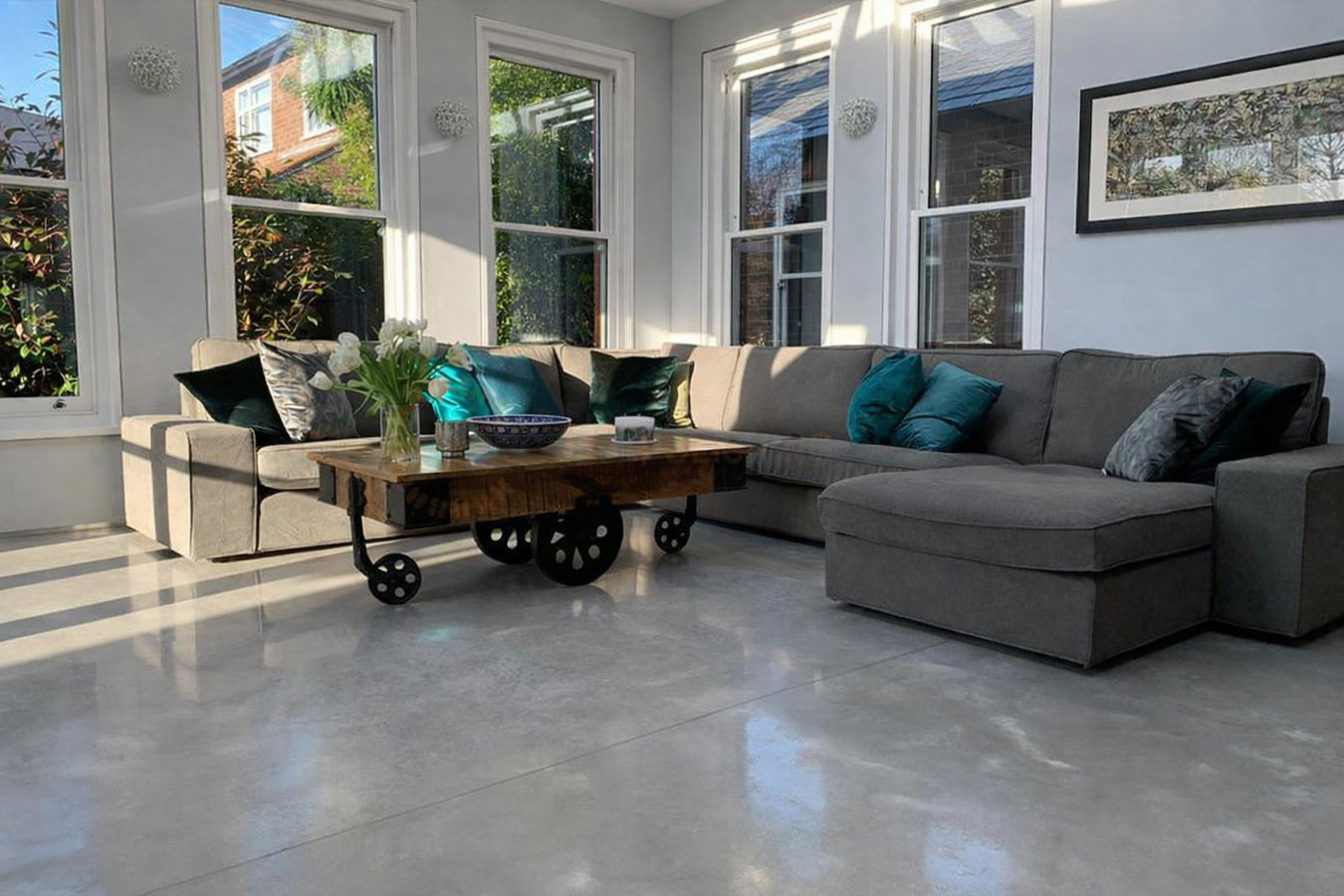
We install concrete floors for basements, garages, utility rooms, and ground-level interior spaces throughout the Charlottesville area. Every project starts with an on-site assessment - because the scope of demo, base prep, and finish work varies significantly between a 1950s basement slab and a new garage pour in a recently built home. For homeowners who want something beyond a plain gray surface, we offer sealed, polished, and stained finishes that are easier to clean and more durable than standard concrete. We also handle concrete pool decks for outdoor slab work that requires the same level of base preparation and finish quality.
For older homes in Charlottesville, demo is often the first step - breaking out an existing slab, hauling the debris away, and assessing what the ground underneath actually looks like before anything new goes in. We include a clear scope of demo and base work in every written estimate so you know exactly what you are paying for before the project starts.
Suited for homeowners with cracked, damp, or uneven original slabs who want a floor they can actually use or finish.
A four-inch slab with proper base prep is standard for garages; we can add a sealer or non-slip broom finish to match how you use the space.
For basement conversions where the floor needs to be leveled, raised, or finished for tile, vinyl plank, or direct use.
Ideal for landlords, home offices, or anyone who wants a low-maintenance, durable surface that holds up to heavy cleaning and daily use.
For projects where the old concrete must come out first - we break it up, haul it away, and prepare the ground for the new pour.
Built into every pour we do - not an optional upgrade - because Charlottesville's clay soil makes it essential for any slab that will last.
Charlottesville's housing stock skews older. A significant share of homes in city neighborhoods - Belmont, Fifeville, and the areas west of downtown - were built before 1960, often before vapor barriers and proper sub-base preparation were standard practice. Original basement slabs in these homes are frequently thin, uneven, and poured directly on uncompacted soil. When you replace one of these floors, the scope of demo and base work is almost always more substantial than in a newer home. Getting a thorough on-site assessment before signing a contract is essential - it is the only way to understand what the ground underneath actually looks like. Homeowners in Lynchburg and Waynesboro work with similar older housing stock and the same clay soil conditions.
The climate adds another constraint. Charlottesville typically sees freezing overnight temperatures from late November through early March, and concrete poured in cold weather can freeze before it hardens properly - producing a weak, crumbly surface. Most experienced local contractors avoid pouring in that window, or take specific cold-weather precautions that add cost. Late spring through early fall is the best scheduling window, and that window tends to fill quickly. Charlottesville's large student and rental market near the University of Virginia also creates consistent demand for durable, sealed finishes that handle tenant turnover and frequent cleaning.
The Portland Cement Association and the American Concrete Institute both publish guidance on concrete floor installation best practices, including curing procedures and base preparation requirements that apply directly to residential projects in this climate.
We respond within one business day. We will ask about the size of the space, what is there now, and what you want the finished floor to look like. Most projects need an on-site visit before we can give you a real number - the condition of the existing floor and ground underneath affects the price significantly.
We check the existing floor or ground, look for moisture issues, and assess what base preparation the project needs. This visit typically takes 20 to 40 minutes. A written estimate follows within a few days - with the demo scope, base prep, and finish all spelled out clearly.
If there is an existing slab we break it out and haul it away. Then we grade and compact the ground, add gravel, and install a moisture barrier before the pour. The concrete is mixed and poured, then smoothed and finished. This phase typically takes one to three days depending on size.
Stay off the floor for at least 24 to 48 hours, then light foot traffic is fine. Avoid heavy loads for about a week. The building inspector will schedule a sign-off - we coordinate that appointment for you. Your floor reaches full strength at 28 days.
We assess every site in person before quoting. No surprises on scope, no surprises on price - just a written estimate you can compare.
(434) 235-6128Charlottesville's clay soil shifts with the seasons - wet in spring, dry in summer. A slab poured directly on clay will crack. We compact a gravel base and install a moisture barrier under every residential pour, which is what keeps your floor level and dry five years from now.
A large share of Charlottesville homes were built before 1970, and their original basement slabs are often thin, uneven, and poured directly on uncompacted soil. We assess what is underneath before quoting, so the scope of demo and base prep is not a surprise after work starts.
We pull every required permit through the City of Charlottesville or Albemarle County, and coordinate the building inspector sign-off. Virginia licenses concrete contractors through the Department of Professional and Occupational Regulation - a record of permitted, inspected work protects your home when you sell or file an insurance claim.
Whether you need a sealed surface that handles tenant turnover near UVA, a polished basement floor for a home office, or a broom-finished garage slab that cleans up fast, we match the finish to how the space will actually be used - not just what looks good in a photo.
From the first site visit to the final inspector sign-off, we handle the full process - including permits, scheduling around Charlottesville's seasonal weather windows, and delivering a finished floor built for the actual conditions under your home.
Outdoor concrete slab work around pools that demands the same careful base preparation and finished surface quality as an interior floor.
Learn MoreA specialized pour for garage spaces, with finish and thickness options chosen for vehicle loads, oil spills, and daily use.
Learn MoreCall Charlottesville Concrete today or request a free estimate online. The best weather window for concrete in Charlottesville books up early, and a written quote costs you nothing.