Loading...
Serving Charlottesville, VA and surrounding areas. (434) 235-6128
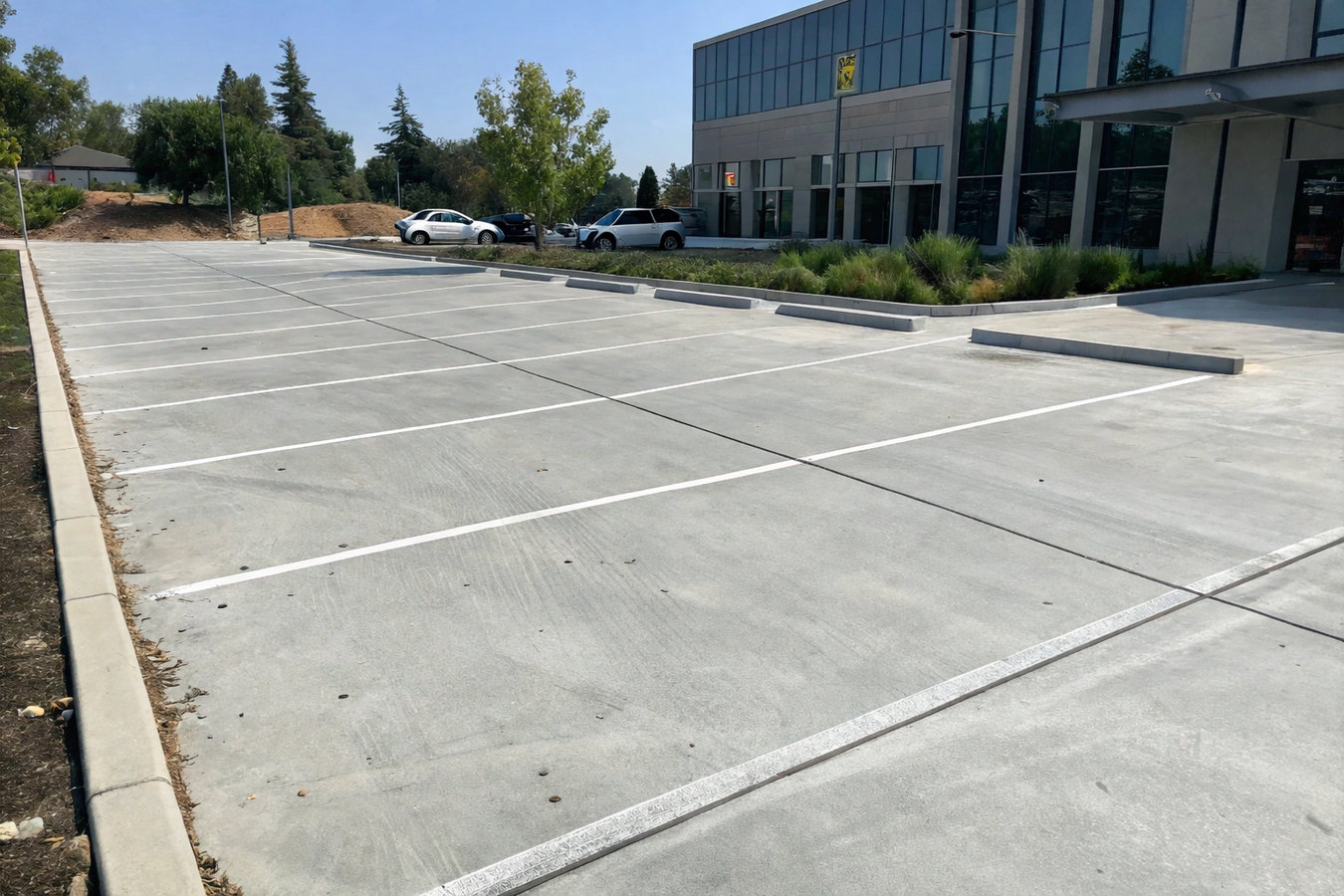
Gravel turns to mud. Asphalt cracks. A properly built concrete parking lot stays solid for decades - draining correctly and handling Virginia winters without falling apart.
Concrete parking lot building in Charlottesville means excavating the area, compacting a gravel base, setting forms, pouring reinforced concrete, and finishing the surface with the right slope for drainage - most residential and small commercial jobs take two to five days from start to finish, and the surface is ready for vehicles within a week.
A lot of Charlottesville properties - especially those with detached garages, outbuildings, or older gravel lots - are good candidates for concrete parking. Gravel lots turn to mud every wet winter and kick up dust in summer. An aging asphalt lot cracks and softens in the heat. Concrete solves both problems permanently, and in this climate it is the more cost-effective surface over the long run even though it costs more upfront. Homeowners who are also paving a driveway often look at concrete driveway building at the same time, which lets us coordinate the work and reduce disruption on the property.
Every parking lot project here starts with a site visit so we can check slope, soil type, and drainage before giving you a number. A price without a site assessment is not a real price.
If you have filled cracks in your existing parking area and they keep reappearing - especially after winter - the base underneath has likely shifted or settled. In Charlottesville's clay soil, this is common: the ground moves with moisture and temperature, and a surface that cracks repeatedly is telling you the foundation beneath it is not stable. Patching the surface will not fix the underlying problem.
Charlottesville gets around 45 inches of rain per year, and a parking surface that holds standing water after a storm is a problem. Pooling water works its way into small cracks, freezes in winter, and widens those cracks from the inside. If you notice puddles that do not drain within an hour or two of a rain stopping, your surface either lacks proper slope or the drainage underneath has failed.
Many older Charlottesville properties - especially those with detached garages or outbuildings - still have unpaved parking areas. If your gravel lot turns to mud every winter or creates dust in summer, a concrete surface would eliminate both problems. It also makes the property easier to maintain and more attractive to buyers if you ever sell.
If you are building a garage, a rental unit, or adding a home-based business to your property, a concrete parking lot is often the most durable and code-compliant solution. Charlottesville's zoning rules may require a certain number of paved parking spaces depending on the use, so it is worth checking with the city before you start.
We build residential parking pads, multi-car lots, and small commercial parking areas throughout the Charlottesville region. Every job starts the same way: a site visit to check the grade, existing surface, and drainage before any quote goes out. From there we excavate to the correct depth, bring in and compact a gravel base layer, set forms, pour concrete to the right thickness for your intended use, and finish the surface with a broom texture and the proper drainage slope. We also handle the permit process with the City of Charlottesville's Department of Neighborhood Development Services when the project requires it.
Clients adding a new garage or detached structure often schedule concrete footings alongside the parking lot work, which lets us coordinate excavation and reduce the number of separate crews on site. Whether you need a simple two-car pad or a larger lot with curbing and drainage features, we size the slab thickness and base depth to match what you plan to park there - cars and light trucks need different specs than delivery vehicles or heavy equipment.
For homeowners replacing gravel or adding paved parking next to a garage or outbuilding. Sized for standard passenger vehicles.
For properties that need several spaces - rental units, home businesses, or larger residential lots with multiple vehicles.
For property owners whose existing asphalt lot has reached the end of its useful life and want a longer-lasting concrete surface.
For small commercial properties that need a heavier slab spec to handle delivery vehicles or regular commercial traffic.
For sites with challenging slope or stormwater requirements - includes engineered drainage, swales, or drain inlets as needed.
For property owners who want defined, finished edges on their parking area to contain the slab and give the lot a clean, complete look.
Charlottesville sits in a climate zone where temperatures drop below freezing in winter and climb into the 90s in summer. That repeated freezing and thawing puts stress on every paved surface, and concrete that was not mixed or cured correctly will start cracking within a few winters. The red clay soil throughout this region compounds the problem - it expands when wet and contracts when dry, which means a parking lot that was built without a deep, properly compacted gravel base is going to shift. The crews building parking lots in Belmont and the neighborhoods around the University of Virginia know what local soil looks like under the surface, because they have excavated it on dozens of projects.
Charlottesville also has stormwater management requirements that apply when you add paved surface to a property. Adding a large concrete area changes how rain runs off your lot, and the city wants to know that water is going somewhere controlled. Homeowners in Charlottesville and in the surrounding areas like Waynesboro often find that a contractor familiar with local permit offices moves faster and avoids costly redesigns. The American Concrete Pavement Association publishes standards for base preparation and drainage design that apply directly to jobs in this climate.
When you reach out, we schedule a time to visit your property - usually within a business day or two. The visit lets us measure the area, check slope and drainage, and see what is currently on the ground. Bring any questions about size, drainage, or permits to this meeting.
After the visit you receive a written estimate covering excavation, base material, concrete, and finishing. We will also tell you whether your project needs a permit and who handles that. Nothing is signed until you understand what is included and what the permit process looks like.
On the first day of work, the crew excavates the area and hauls away existing material. They then bring in and compact a layer of crushed stone. This prep work is the most important part of the job - a solid base is what keeps your surface from cracking within a few winters.
Once the base is ready, forms are set and concrete is poured, spread, and finished. Stay off the surface for 24 to 48 hours, and avoid driving on it for at least seven days. When curing is complete, we walk the finished surface with you and cover maintenance basics before we leave.
We visit the property first, then send you a written estimate that spells out every cost. No surprises.
(434) 235-6128The red clay running under most Charlottesville lots expands when wet and contracts when dry. We excavate to the depth your specific site requires and replace that clay with properly compacted gravel before we pour. This is the step that separates a parking lot that lasts 30 years from one that cracks in three winters. The American Concrete Institute sets the standards we follow for base preparation on clay-heavy sites.
Every parking lot we build has a planned drainage slope so water runs off cleanly after a rain. Standing water is the enemy of any paved surface, and in Charlottesville's rainy climate it works its way into cracks and widens them every winter. We design the slope into the job from the start - not as an afterthought.
A common complaint with concrete contractors is a lowball quote that climbs once work starts. We give you a written estimate that specifies excavation depth, base thickness, concrete thickness, and all finishing work before you commit. If something unexpected comes up on site, we tell you before proceeding - not after.
The City of Charlottesville's permit office has its own requirements for paved surfaces that change how water drains off a property. We know when a project triggers review and how to submit the right documentation. Property owners who have worked with us avoid the delays that come from contractors who are not familiar with local permit offices.
Every one of these points connects to the same thing: a parking lot that still looks and drains correctly in ten years, not one that needs patching or full replacement within five. That is what proper base prep, honest pricing, and local permit knowledge actually deliver.
Structural footings for garages, additions, and outbuildings - sized to Charlottesville's frost line and clay soil conditions.
Learn MoreFull driveway installations from the street to your garage - built with the same base prep standards as our parking lots.
Learn MoreSpring scheduling fills fast - reach out now and lock in your project date before the best crews are booked.