Loading...
Serving Charlottesville, VA and surrounding areas. (434) 235-6128
Building on unstable ground costs you later. We pour slab foundations engineered for Charlottesville's clay soils, with permits pulled, inspections handled, and no surprises on the final invoice.
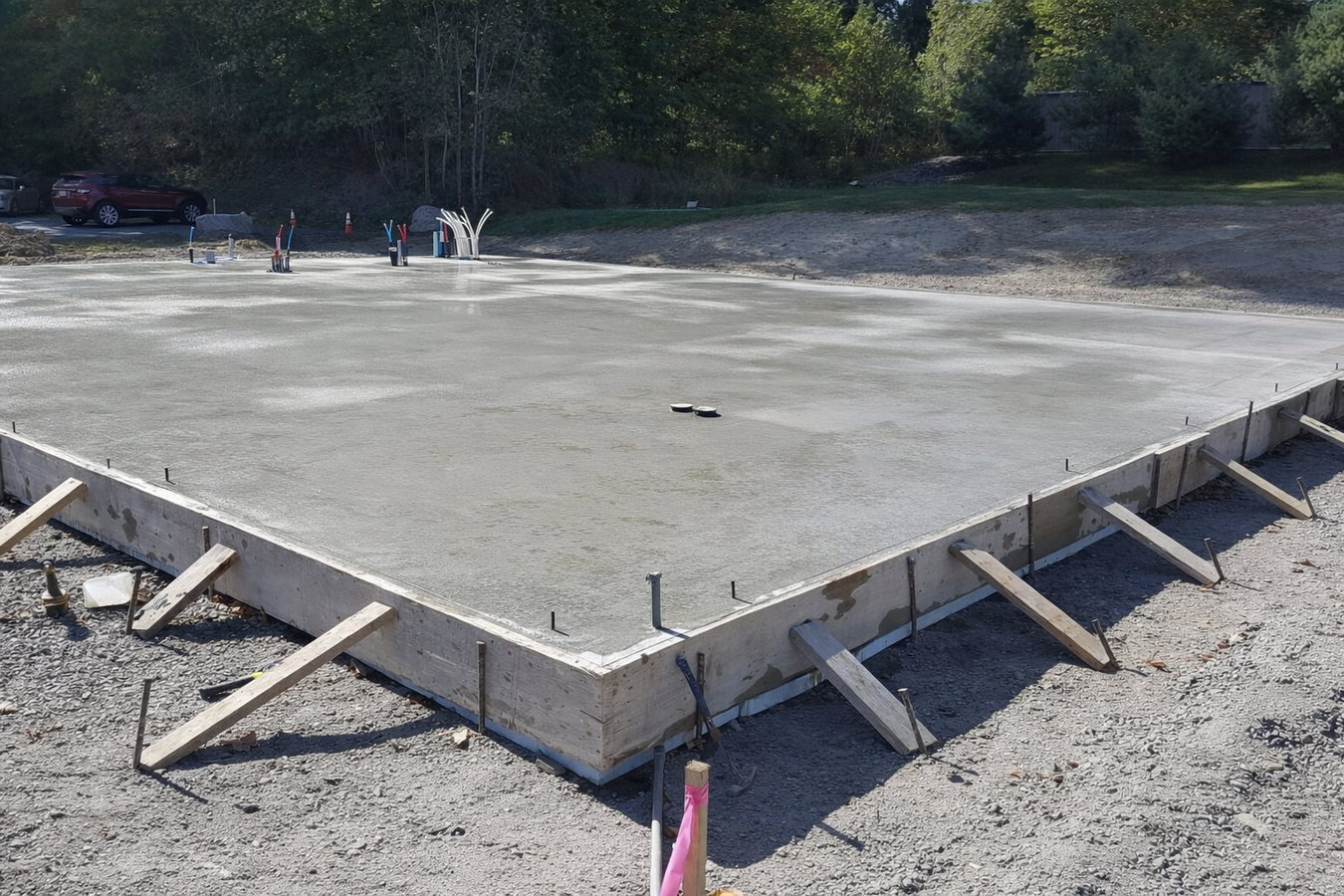
Slab foundation building in Charlottesville means grading and compacting the site, laying a gravel base and moisture barrier, placing steel reinforcement, and pouring a single thick concrete pad - typically 4 to 6 inches deep across the floor area with thickened edges where walls will sit - and most residential slabs are poured in one to three active working days, though the full timeline including permits and curing is usually four to eight weeks.
A slab is one of the most common foundation types for newer construction in Virginia, particularly for detached garages, additions, and single-story homes where a crawl space or basement is not required. In Charlottesville, the clay-rich Piedmont soil makes proper base preparation more important than in sandier regions - the ground here moves with the seasons, and a slab poured on unprepared clay is a foundation that will show cracks and settlement within a few years. Homeowners building a new structure on the same property often combine slab work with foundation installation for attached structures, addressing both needs under one project.
The permit process is not optional here. Both the City of Charlottesville and Albemarle County require a permit before foundation work begins, and an inspector reviews the work at key stages. A contractor who handles this on your behalf is doing things correctly - one who suggests skipping it is not.
The most straightforward reason to have a slab poured is that you are building something new - a home, a room addition, a detached garage, or an accessory dwelling unit. Your architect or builder will typically specify the foundation type in the plans, and a slab is often the most cost-effective choice for single-story structures in Charlottesville where a basement is not required.
Hairline cracks in concrete are normal and usually cosmetic. But if you notice cracks wider than about a quarter inch, cracks where one side is higher than the other, or cracks that seem to be growing over time, the slab may be moving or settling unevenly. In Charlottesville's clay-heavy soil, this kind of movement is more common than in areas with stable ground, and it is worth having a professional look before the situation gets worse.
When a slab shifts or settles unevenly, the walls above it shift too - and one of the first things homeowners notice is that interior doors start sticking or gaps appear around window frames. If you have noticed this getting worse over a wet spring or a dry summer, that pattern lines up with when Charlottesville's clay soils are most active. The foundation may be the source.
Many older Charlottesville homes have carports, covered patios, or outbuildings sitting on bare ground or a thin pad not designed for living space. Converting one of these spaces into a finished room typically requires a properly engineered slab with the right thickness, reinforcement, and moisture barrier to meet current building standards and pass the required inspection.
We build new slab foundations for residential properties throughout the Charlottesville area, handling everything from the initial site assessment through the final inspection. Every project starts with grading and soil preparation - removing topsoil and organic material, compacting the subbase, and installing a gravel drainage layer and moisture barrier. Steel reinforcing bar or wire mesh goes in next, positioned correctly before the concrete arrives. For projects that also require underground plumbing or conduit, we coordinate with your plumber so that work is completed and inspected before the pour - because anything buried beneath the slab has to be right the first time. Many clients who are building new structures also pair slab work with concrete footings for attached walls or porches that are part of the same project.
We handle permits through whichever jurisdiction your property falls in - City of Charlottesville or Albemarle County - and coordinate the required inspections so you have an official record that the work was done correctly. After the pour, we cut control joints while the concrete is still workable to give the slab a place to crack in a straight, predictable line rather than randomly across the floor.
For new home construction, detached garages, and additions where a slab-on-grade is specified by the plans.
Smaller footprints for room additions, sunrooms, and accessory dwelling units - designed to match the existing structure where needed.
For existing slabs that have cracked, heaved, or settled beyond repair - full demolition and rebuild from prepared subgrade.
Compaction, gravel base, and moisture barrier installation - the steps most critical to long-term performance in Charlottesville's clay soil.
Scheduling and coordination with your plumber for pipes and conduit that must be buried before the pour.
We pull permits from City of Charlottesville or Albemarle County and schedule inspections at each required stage.
Charlottesville sits in Virginia's Piedmont region, where the native soil contains a significant amount of clay. Clay soil expands when it absorbs water and shrinks when it dries out - meaning the ground under your slab is constantly moving in small ways throughout the year. A contractor who does not account for this through proper compaction, gravel base preparation, and correct footing depth is setting you up for cracking and settlement problems within a few years. Frost depth in this part of Virginia is generally around 12 to 18 inches, and footings that do not extend below that can heave when the ground freezes in January and February. Homeowners in Harrisonburg and Staunton face similar conditions and benefit from the same preparation standards.
The permit landscape also requires local familiarity. Whether your property is inside the City of Charlottesville or in Albemarle County determines which building department you work with - and these are two separate offices with different processes and timelines. Charlottesville has also seen significant in-fill development and teardown activity, especially near the University of Virginia and downtown. These older lots sometimes have buried debris, previous foundation remnants, or disturbed fill soil that affects the base preparation work. A concrete slab contractor who does a site assessment before quoting - rather than estimating from a satellite view - is the one you want on this kind of project.
We ask a few basic questions about your project and schedule a site visit. We reply within one business day - and we will not give you a real number until we have seen the ground conditions, because what is under the surface matters more than the footprint dimensions.
After the visit you receive a written, itemized estimate. Once you accept, we apply for the permit through the correct jurisdiction - City of Charlottesville or Albemarle County. Permit approval typically takes a few days to a few weeks, so plan accordingly.
The crew grades and compacts the area, installs the gravel base and moisture barrier, and sets up forms. Any pipes or conduit that need to run under the slab are placed and inspected at this stage - the last chance before the pour.
Concrete arrives, the pour happens, and the surface is finished and control-jointed the same day. An inspector reviews the work before framing begins. The slab is walkable in 24 to 48 hours and reaches full structural strength over about 28 days.
No pressure, no obligation - just a clear number based on your actual site so you can make an informed decision.
(434) 235-6128Charlottesville's clay-heavy soil swells with moisture and shrinks in dry spells, and a slab poured on unprepared clay will show it within a few years. We compact the subbase, install a gravel drainage layer, and lay a moisture barrier before any concrete is placed - the steps that determine whether a slab stays level for decades or starts cracking in three years.
Whether your property is inside the City of Charlottesville or in Albemarle County, we pull the permit from the right office and coordinate the required inspections. Virginia contractor licensing is verified through the Department of Professional and Occupational Regulation - you can look up any contractor's license status before you sign anything.
The frost depth in the Charlottesville area is roughly 12 to 18 inches. Footings that do not extend below that depth can heave when the ground freezes, which causes cracking across the rest of the slab. We build thickened-edge footings to the correct depth so freezing ground has no leverage on your foundation.
Unexpected costs after work has begun are one of the most common frustrations with foundation projects. We visit your site, assess the actual conditions, and provide a written quote that accounts for your specific ground, access, and any drainage work your lot requires - so the final invoice matches what you agreed to at the start.
A slab foundation is not a place to cut corners - it is the one part of your structure that everything else depends on. We focus on getting the base work right, because that is where the difference between a foundation that lasts and one that fails shows up years later.
Full foundation installation for new homes and structures, including basement and crawl space foundation types built for Charlottesville's variable terrain.
Learn MoreConcrete footings for walls, columns, and attached structures that need a separate bearing point from the main slab.
Learn MoreSpring and fall fill up fast - reach out now to get on the schedule and lock in your project start date before quality crews book out.