Loading...
Serving Charlottesville, VA and surrounding areas. (434) 235-6128
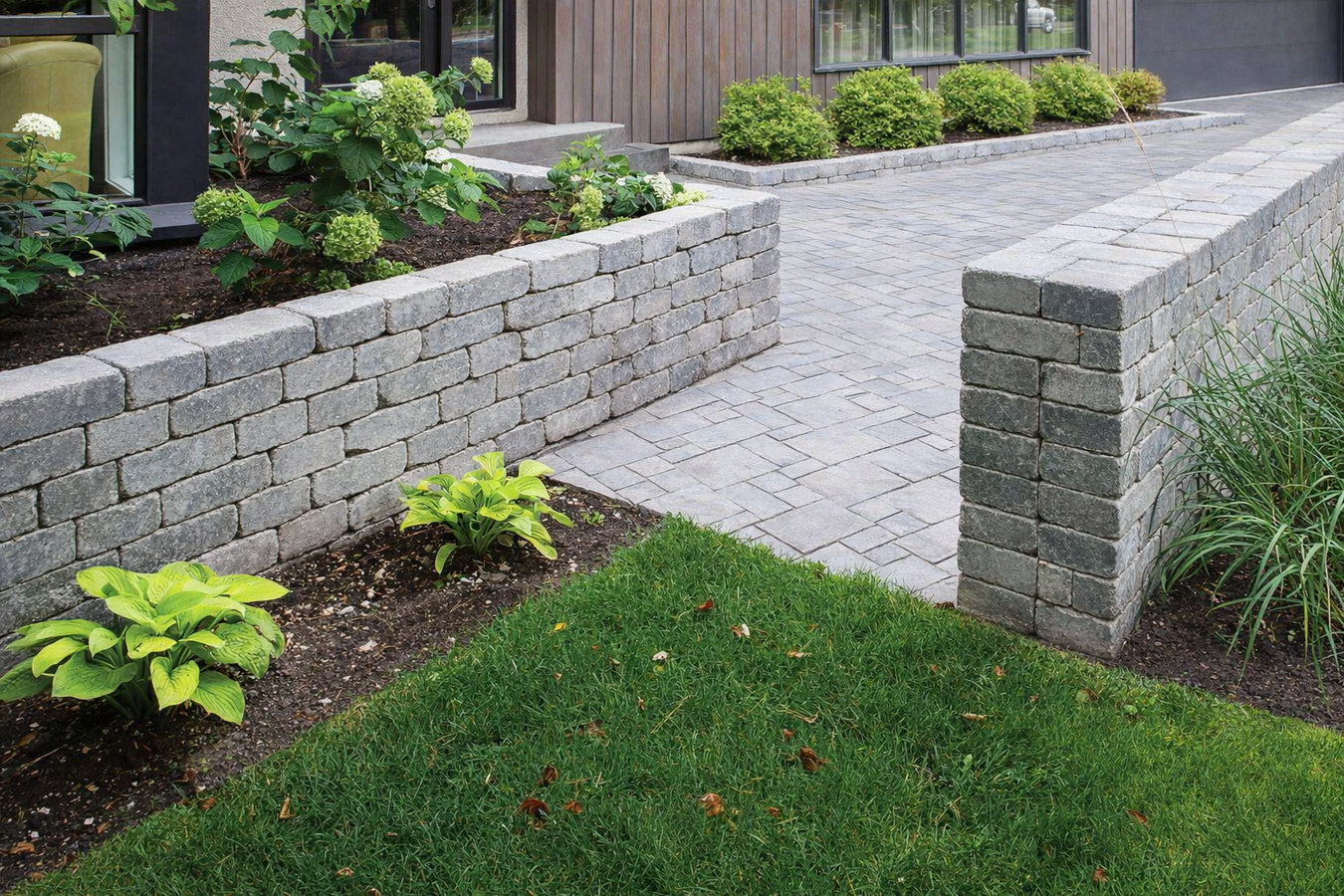
Charlottesville slopes move. Clay soil gets heavy after rain, freeze-thaw cycles stress every wall, and erosion does not wait. A properly drained, permitted concrete wall stops that movement for good.
Concrete retaining walls in Charlottesville hold back soil on slopes to prevent erosion and land movement, with most residential projects completed in two to five days of active construction - plus permit review time for walls over four feet tall.
For many Charlottesville homeowners, the problem is a hillside that keeps washing downhill after every hard rain. The clay-heavy Piedmont soil here holds water, gets heavy, and moves - slowly at first, then faster once erosion starts. A well-built concrete wall with proper drainage behind it gives that hillside a permanent edge. Homeowners considering a new wall often also need concrete steps to connect the terraced levels safely.
The part most homeowners do not see - the gravel backfill and drain pipe behind the wall - is what separates a wall that lasts 50 years from one that leans within five. Drainage handles the water pressure that clay soil generates after every rainstorm, and that pressure is the most common reason walls fail here.
If you notice soil, mulch, or gravel moving down a slope after a heavy rain, the ground is eroding faster than vegetation can hold it. Charlottesville's clay soil looks stable when dry but moves quickly when saturated. Left alone, that erosion can undercut a driveway edge, expose tree roots, or push sediment toward your home's foundation.
If the ground near a sloped area looks like it is slowly pushing into a patio, driveway, or foundation - you might notice cracking pavement or a patio starting to tilt - the hillside is moving. This is especially common on Charlottesville lots where the natural grade runs toward the house. A retaining wall stops that movement before it becomes a structural problem.
If you already have a wall and it is starting to lean forward, bow outward, or show white chalky streaks running down the face, those are signs of stress. The white streaks mean water is moving through the wall instead of draining behind it - a drainage failure that will only get worse. A leaning wall that is not addressed can fail suddenly, especially after a wet winter.
Many Charlottesville homeowners have sloped backyards that are essentially unusable - too steep to mow safely, too unstable to plant, and too awkward for outdoor furniture. A retaining wall creates a level terrace out of that space. If you have been looking at a slope and wishing it were flat, that is a practical reason to consider a wall.
We build poured concrete and concrete block retaining walls for residential and light commercial properties throughout the Charlottesville area. Every wall starts with proper excavation, a poured concrete footing set below the frost line, and gravel backfill with drain pipe installed before the wall goes up. We handle projects from short garden-level walls to taller structural walls requiring permits and engineering review. For homeowners who need new surfaces alongside their wall project, we also offer concrete floor installation for basement or garage spaces that are part of the same project scope.
Walls taller than four feet require a building permit in Charlottesville and Albemarle County, and some taller walls need a stamped engineer's drawing as well. We handle the permit application for every project that requires one - you should not need to navigate the permit office yourself. We also work with homeowners who need existing walls assessed, repaired where possible, or removed and rebuilt when the original work cannot be saved.
Ideal for taller structural walls where maximum strength and a clean face are both priorities.
Suits homeowners who want a straightforward, durable wall for garden beds, grade changes, or smaller slope transitions.
For steep slopes where a single tall wall is not practical - multiple shorter walls step up the hillside and distribute the load.
Every wall includes gravel backfill and drain pipe; we also tie in surface drainage solutions when the surrounding grade directs water toward the house.
For existing walls that are beyond repair - leaning, failing drainage, or structurally compromised - we demolish and rebuild correctly from the footing up.
Walls over four feet require city or county permits; we manage the application and coordinate the inspection on your behalf.
Charlottesville sits in the foothills of the Blue Ridge Mountains, and a large share of residential lots in the city and Albemarle County have meaningful slopes. That topography is part of what makes the area beautiful - but it also means retaining walls here often need to handle more soil pressure and steeper grades than walls built on flat ground elsewhere. The red clay soil common throughout the Piedmont region holds water rather than letting it drain through, and saturated clay can become significantly heavier and push much harder against a wall than sandier soils would. This combination of slope and clay makes drainage behind the wall more important here than almost anywhere else in Virginia. Homeowners in Staunton and Harrisonburg face the same Piedmont clay conditions and the same drainage requirements on their sloped lots.
Charlottesville's winters add another layer of complexity. Temperatures drop below freezing dozens of times each year, and those repeated freeze-thaw cycles put stress on any wall whose footing was not set deep enough or whose drainage was not installed correctly. Water that gets behind a wall - or into small surface cracks - expands when it freezes, slowly widening those cracks over time. Established neighborhoods near downtown, including Belmont and the areas around the University of Virginia corridor, also have tight lots and mature trees that make equipment access more challenging and require careful planning before any excavation begins.
For reference on concrete best practices for walls in this climate, the American Concrete Institute publishes technical guidance on concrete construction that informs how contractors should approach retaining wall work in freeze-thaw environments.
We respond within one business day. We will ask about the approximate wall size, the slope height, and whether there is easy equipment access. No honest price can be given without seeing your site, so we schedule an in-person visit - no commitment required.
We walk your property, assess the grade, soil, and access, and confirm whether a permit is needed. The estimate visit takes 20 to 45 minutes and results in a written quote. If a permit is required, we handle the application - plan for one to three weeks of review time before work starts.
The crew excavates the base below the frost line, pours the footing, builds the wall, and installs gravel backfill and drain pipe before backfilling the surrounding soil. Depending on wall size, this phase takes one to three days. You do not need to be home, but being reachable by phone is helpful.
Once the wall is complete we clean up the work area, coordinate any required city or county inspection, and walk you through the finished wall. We point out the drainage outlets at the base - after the first significant rainstorm, check that water is exiting there as it should.
We visit every site before quoting. No pressure, no phone estimates - just a written number you can compare.
(434) 235-6128Every wall we build includes gravel backfill and perforated drain pipe behind the wall face. This is not an add-on - it is the part of the job that keeps a wall standing for decades instead of leaning within a few years. In Charlottesville's clay-heavy soil, skipping this step is the single biggest reason walls fail early.
Charlottesville's freeze-thaw cycles push walls out of position when footings are too shallow. We dig below the frost line - roughly 12 to 18 inches in central Virginia - so the footing stays stable through every winter. You will never see it once the job is done, but you will notice the difference in year five.
We pull every required permit through the City of Charlottesville or Albemarle County and coordinate the inspection. Virginia requires contractors to be licensed through the Department of Professional and Occupational Regulation - you can verify any contractor there before signing anything. A permitted wall protects your home when you sell.
Charlottesville's sloped lots range from a gentle grade in Fry's Spring to steep hillsides in Albemarle County, and tight access in older neighborhoods changes the job significantly. We visit every site in person before providing a written quote, so the number you agree to is the number you pay.
Every retaining wall we build is designed around the specific conditions of your lot - the grade, the soil, the access, and the Charlottesville climate that will stress it every winter. That is how walls last decades here instead of failing in the first wet season.
When a retaining wall creates a new basement or lower-level space, a new concrete floor ties the project together with a stable, finished surface.
Learn MoreConnect terraced levels created by a retaining wall with durable concrete steps built for the same freeze-thaw conditions as the wall itself.
Learn MoreCall Charlottesville Concrete or submit an estimate request today. A written quote costs nothing, and waiting until a wall is actively leaning costs far more to fix.