Loading...
Serving Charlottesville, VA and surrounding areas. (434) 235-6128
A foundation that was not built for local soil and rainfall will show it within a few years. We install foundations for Charlottesville homes using methods that account for Piedmont clay, Virginia weather, and the permit requirements of both city and county offices.
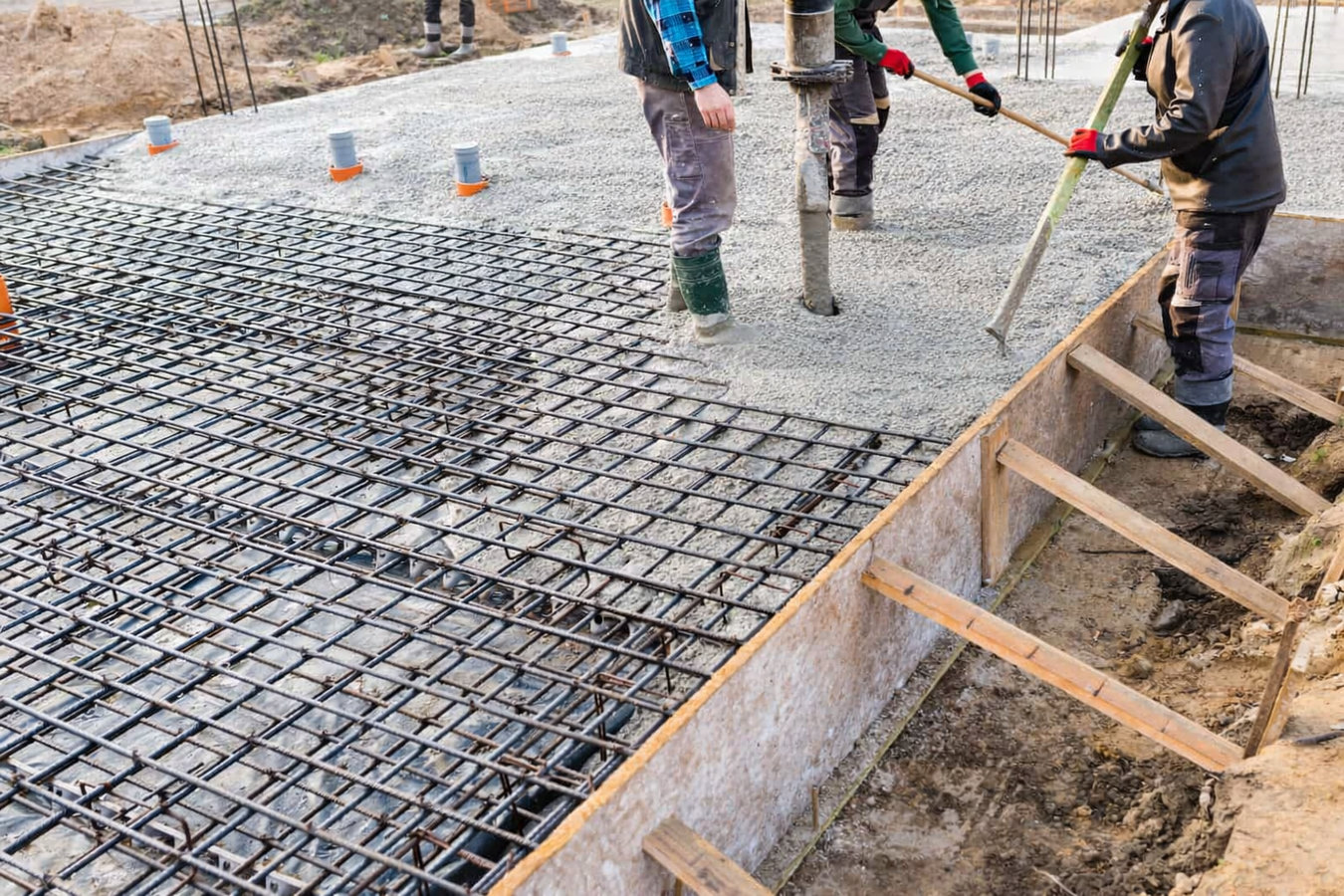
Foundation installation in Charlottesville typically takes one to three weeks from the first day of digging to the point where framing can begin - the crew excavates to the required depth, prepares a gravel base, builds forms, places steel reinforcement, pours the concrete, applies waterproofing, and installs drainage systems before the soil is backfilled, with the concrete needing about 28 days to reach full strength.
Most homes in the Charlottesville area are built on one of three foundation types: a full basement, a crawl space, or a concrete slab poured directly on the ground. The right choice depends on the terrain, your budget, and how the home will be used - a sloped lot in the foothills may make a basement practical, while a flat infill lot near downtown often suits a slab. The red clay soil common throughout the Virginia Piedmont expands and contracts with moisture, which means drainage and waterproofing are not optional extras - they are the difference between a foundation that lasts and one that lets water in within a few seasons. Homeowners building a new home often benefit from understanding how the foundation relates to other structural concrete, such as the slab foundation building process for accessory structures on the same property.
Foundation installation requires a permit in both the City of Charlottesville and Albemarle County - inspections happen at key stages before the work can proceed. A contractor who handles this without being asked is doing things the right way. One who suggests skipping the permit to move faster is not.
If doors or windows in your home have started sticking, swinging open on their own, or leaving gaps at the corners, the frame of your house may be shifting. This kind of movement often starts at the foundation. In Charlottesville's clay-heavy soil, seasonal wet and dry cycles can cause gradual movement that shows up first in your doors and windows before you ever see a crack in the wall.
Diagonal cracks - especially ones that are wider at one end than the other - are a sign that part of your foundation is settling more than another part. This is different from the hairline cracks that appear in drywall from normal house settling. If you see cracks that are growing over time or that you can fit a coin into, it is worth having a professional assess the foundation.
Charlottesville gets significant rainfall, and if water is finding its way into your basement or crawl space after a heavy storm, your foundation may not be draining or sealed properly. Standing water underneath your home leads to mold, wood rot, and eventually structural damage. This is one of the most common complaints from homeowners in the area, and it often points to a foundation that was not waterproofed correctly or that has developed cracks over time.
If you have purchased land in Charlottesville or Albemarle County and are planning to build, foundation installation is the first major step after permits are approved. The terrain here varies considerably - from flat lots near downtown to sloped parcels closer to the foothills - so getting a site assessment early in the process helps you understand which foundation type makes sense and what the realistic cost range will be.
We install residential foundations throughout the Charlottesville area for new construction, additions, and replacement of failed or deteriorated foundations on existing homes. Every project starts with a site visit to assess the terrain and soil conditions before any quote is given - because the ground here varies enough that a number without a site assessment is not a real number. After excavation and base preparation, we build forms, place rebar, and pour the concrete. For basement and crawl space foundations, we apply below-grade waterproofing and install drainage systems before backfilling - treating waterproofing as part of the job, not an optional add-on. Many clients who are building new structures pair foundation installation with concrete parking lot building or driveway work that happens on the property at the same time, which allows us to coordinate the schedule and reduce site disruption.
We handle permits through the City of Charlottesville or Albemarle County - whichever applies to your property - and coordinate all required inspections. We also provide an honest assessment of existing foundations: if repair is the right call, we tell you that; if the foundation needs full replacement, we tell you that too, and we explain why.
For new homes where below-grade living or storage space is desired - excavated to depth, poured walls, waterproofed, and drained.
Common in older Charlottesville neighborhoods - allows access to plumbing and wiring without a full basement excavation.
Cost-effective for single-story structures and additions on relatively flat lots, with proper subgrade preparation for clay soil.
For existing foundations that have cracked, settled, or deteriorated beyond repair - including work on older homes in established neighborhoods.
Below-grade waterproofing membrane and perimeter drainage installed as standard on all basement and crawl space foundations.
We file with the correct jurisdiction and schedule all required inspections so the work is officially on record.
Charlottesville sits at the edge of the Blue Ridge Mountains, and the terrain across the area varies considerably. Some properties have rock close to the surface - especially those on slopes or closer to the foothills - which requires specialized equipment to excavate and adds to the cost and timeline. Other areas have softer, more variable soils. The red clay that runs through much of the city and surrounding county is expansive, meaning it moves with moisture and puts ongoing stress on foundations that were not designed to accommodate that movement. Charlottesville also averages around 45 inches of rain per year, which makes proper waterproofing and drainage more critical here than in drier parts of Virginia. Homeowners in Fredericksburg and Lynchburg deal with similar clay and rainfall conditions, and the same preparation standards apply.
Many of Charlottesville's most desirable neighborhoods - including Belmont, Fry's Spring, and the areas around the University of Virginia - have homes built in the early to mid-1900s. Foundations on these properties often do not match current standards, and replacement work is more involved than a new build. It is also more important on older homes that permits and inspections are handled correctly, because these properties can have surprises once the crew starts digging. A contractor who does a thorough site assessment before quoting is the one you want on a job like this.
We ask a few basic questions and schedule a site visit - we reply within one business day. We will not give you a real number without seeing your property, because terrain and soil type vary enough in this area to make desktop estimates unreliable.
After the visit you receive a written, itemized proposal. Once accepted, we apply for the permit from the correct jurisdiction. Permit approval typically takes a few days to a couple of weeks - we track this so you do not have to.
The crew excavates to the required depth, compacts the base, lays gravel for drainage, and builds forms. A building inspector visits at this stage to approve the setup before the concrete pour begins.
The pour typically happens in a single day for most residential foundations. After curing, we apply waterproofing and drainage systems before backfilling. A final inspection gives you official approval and a clean paper trail for when you sell.
No pressure and no obligation - just an honest assessment of your site and a clear number based on actual conditions.
(434) 235-6128Charlottesville averages around 45 inches of rain per year, and a foundation that is not properly waterproofed will let moisture in within the first few seasons. We apply waterproofing to exterior foundation walls and install drainage systems that carry water away before it can build up against the concrete - following American Concrete Institute standards for below-grade concrete construction.
The red clay that runs through much of the Charlottesville area expands and contracts with every rain and dry spell, and a foundation that was not designed with that in mind will show it within a few years. We account for local soil conditions in every step - from how we prepare the base to how we route drainage away from your home.
The City of Charlottesville and Albemarle County are two separate offices with different permit applications and inspection timelines. We know which office your property falls under and file with the right one - so your project does not stall because of a filing error or an unfamiliar process.
Homes in Belmont, Fry's Spring, and neighborhoods near the University of Virginia were often built on foundations that do not match current standards. Replacement work on these properties is more involved than a new build, and we have the experience to assess what is already there before deciding what needs to change.
Foundation work is the one part of your home where getting it right the first time matters most - a foundation that was cut short on drainage or waterproofing will be letting water in long before the rest of the house shows any wear. We treat every detail of the sub-grade and waterproofing process as critical, because that is what separates a foundation that lasts 50 years from one that needs attention in five.
Concrete parking surfaces for residential and commercial properties - often coordinated alongside new construction foundation work.
Learn MoreSlab-on-grade foundations for detached garages, additions, and single-story structures where a basement is not required.
Learn MoreSpring is the most in-demand season for foundation work in this area - contact us now to get on the schedule before quality crews book out for the season.