Loading...
Serving Charlottesville, VA and surrounding areas. (434) 235-6128
Your backyard has no usable surface, or the old patio is cracking and pooling water near the house. We build concrete patios with the base prep and drainage that Charlottesville clay soil and cold winters demand.
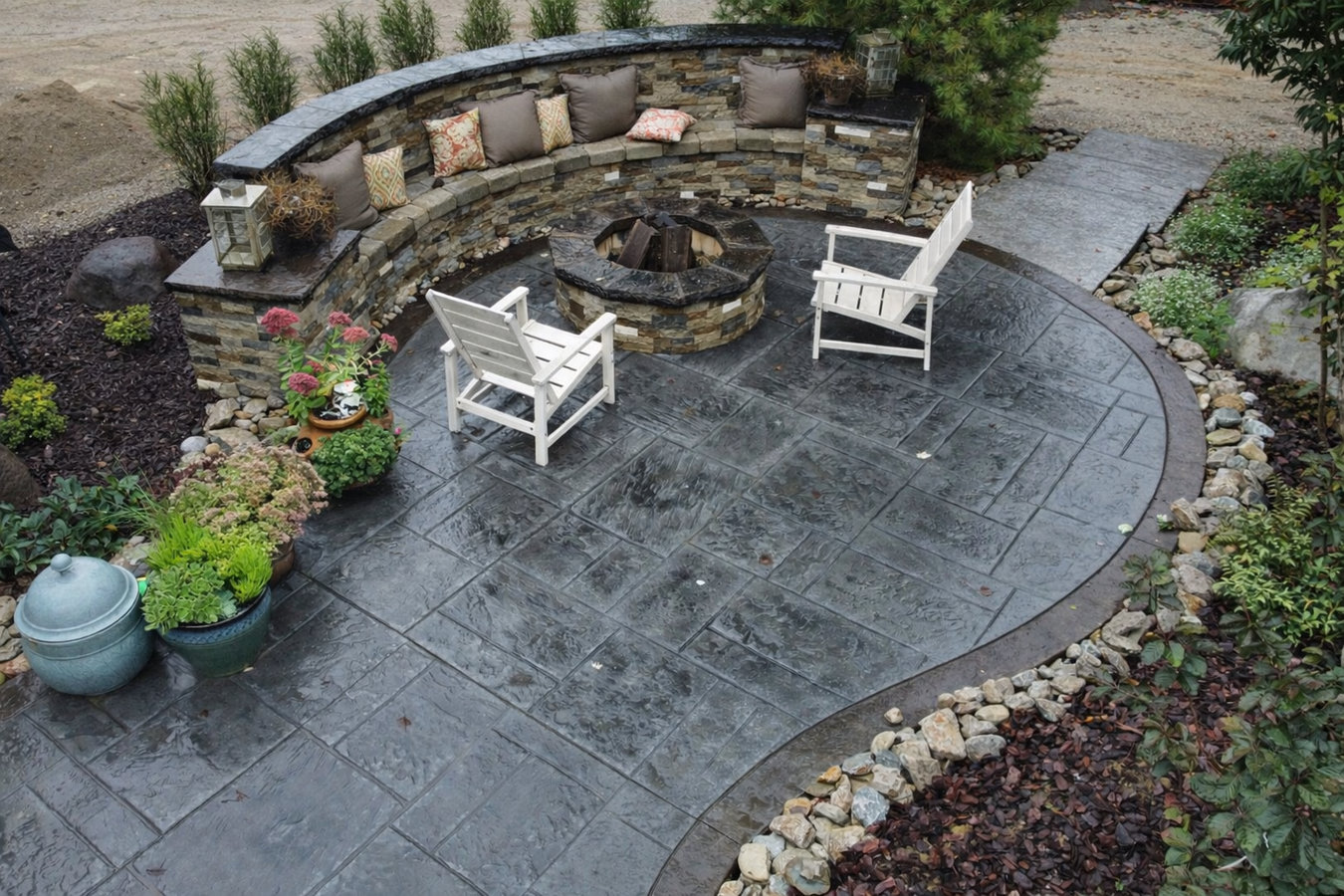
Concrete patio construction in Charlottesville involves site excavation, clay-soil removal, compacted gravel base installation, formed concrete pour with control joints and drainage slope, and a curing period - most residential patios take one to two days of active work plus one week before furniture can go back on the surface.
If your yard in Charlottesville has no patio at all, you are leaving usable outdoor living space empty through the city's long spring and fall seasons. If your existing patio is cracking, shifting, or pooling water near the foundation, the issue is almost always the clay-heavy Piedmont soil underneath - not the surface itself. Patching the top without addressing the base is a temporary fix.
A properly built concrete patio gives you a defined, comfortable outdoor surface that directs water away from your home and holds up through decades of Virginia winters. If you want to go further with your outdoor surfaces, our stamped concrete services can give the same patio a stone or brick pattern finish. We also build concrete pool decks for properties with in-ground pools.
If your backyard is just grass or dirt and you find yourself avoiding it because there is nowhere comfortable to sit, a concrete patio changes how you use your home. In Charlottesville's long spring and fall seasons, that is months of outdoor living space you are currently leaving unused.
Small hairline cracks are normal over time. But if you can fit a coin into a crack, or one section of the slab sits noticeably higher or lower than the next, the base underneath has shifted. In Charlottesville's clay soil, this is common in older patios that were not built with proper gravel drainage beneath them. Patching rarely addresses the root cause.
If standing water collects close to your house after heavy rain, your outdoor surface is not sloped correctly - or it is missing altogether. Charlottesville gets about 45 inches of rain per year, and water that sits against a foundation over time causes real damage. A properly sloped concrete patio directs that water away from the house.
Surface flaking - where the top layer peels away in thin chips - means the original slab was not built for Virginia's freeze-thaw winters, or it was never sealed. Once this process starts, it tends to continue and accelerate. If flaking covers most of the surface, replacement is more cost-effective than patching.
We build new patios from the ground up and replace existing ones that have reached the end of their life. Every project starts with excavation, removal of clay soil down to a stable layer, and a compacted gravel base before any concrete is poured. For homeowners who want a decorative finish, stamped concrete services allow us to press patterns into the wet concrete surface to mimic stone, brick, or slate. For pool properties, we also specialize in concrete pool decks with the slip-resistant finishes that wet surfaces require.
Finish options range from standard broom-finished gray to exposed aggregate, stamped patterns, and integral color. Plain gray is the most budget-friendly and still gives you a clean, durable outdoor surface. A stamped concrete patio costs more but changes the entire feel of an outdoor space. We show you samples before you commit, because the choice is permanent once the concrete cures.
Best for homeowners who want a durable outdoor surface at the most straightforward price point.
Suited for homeowners who want a stone or brick appearance with the cost advantage and durability of concrete.
For existing patios that have cracked, shifted, or have drainage problems that surface patching cannot solve.
For homeowners who have an existing patio and want to add surface area to accommodate more seating or an outdoor kitchen.
The red clay soil that runs through most of the Charlottesville area and the broader Piedmont region is one of the most important factors in how a patio is built here. Clay expands when wet and shrinks when dry, and that seasonal movement causes slabs to crack and shift when the base underneath is not prepared correctly. Charlottesville also sits in a climate zone with real winters - temperatures regularly drop below freezing from December through February - which means concrete that was not designed for freeze-thaw stress will start to degrade on the surface within a few years. Homeowners in Charlottesville and in Waynesboro deal with the same soil and climate - and the same failure modes when patios are built without accounting for them.
Drainage is especially important in Charlottesville because of the city's varied topography and the roughly 45 inches of annual rainfall the area receives. A patio without a proper slope quietly redirects water toward your foundation, and foundation water intrusion is a far more expensive problem than a new patio. The city also requires permits for concrete flatwork attached to the home, and working with a contractor who handles that process correctly protects you when you sell the property. The City of Charlottesville Neighborhood Development Services office is the direct source for permit requirements. Virginia Cooperative Extension also publishes soil and drainage guidance relevant to Piedmont homeowners.
We ask a few basic questions - approximate size, finish preferences, access to the backyard - then schedule a free on-site visit. At the site, we measure, check the slope, and look at how equipment can reach the work zone. You get a written quote covering all work before we begin. We reply within one business day.
If your project requires a city permit - which is common for patios attached to the home - we handle that paperwork entirely. Permit approval typically adds one to two weeks to the timeline. Once approved, you get a confirmed start date and a clear project schedule.
The first day covers excavation to the right depth, clay removal, ground compaction, and gravel base installation. This is the most important step for long-term performance. Forms go in next to hold the concrete in shape for the pour.
Concrete arrives by truck and is poured, spread, and finished - control joints cut, surface texture applied. You can walk on it within 24 to 48 hours. We do a final walkthrough with you before we leave - check the edges, the slope, and the surface. A good contractor wants you satisfied before packing up.
Get a written estimate with no obligation. We handle the permit, excavate to stable soil, and pour a surface built to handle Virginia winters.
(434) 235-6128The clay layer beneath most Charlottesville lots is the reason patios fail. We excavate deep enough to remove it, replace it with compacted gravel, and give your slab a stable base that handles seasonal moisture changes without cracking or shifting. This is the step most homeowners never see - but it determines everything.
Every inch of your new patio is graded so water runs away from your home. In a city that averages 45 inches of rain per year on lots with varied slopes, that is not optional - it is the difference between a patio and a water problem. We plan the drainage before we pour, not after.
A concrete patio that was not designed for repeated freeze-thaw cycles will start to flake within a few years. We use mixes and finishing techniques suited to Virginia's climate zone, and we apply a quality sealer after the curing period. The Portland Cement Association's guidance on cold-weather concrete is the standard we follow - see their resources at cement.org.
Unpermitted concrete work in Charlottesville can create real complications when you go to sell your home. We pull the city permit ourselves, schedule the inspection, and provide you with documentation that the work was done to code. You do not have to manage any paperwork.
A concrete patio is a long-term investment in how you use your home. Getting the base, drainage, and mix design right from the start is what turns it into a 30-year surface instead of a 5-year repair project.
More questions? The Portland Cement Association and Concrete Network both publish detailed homeowner guides on patio construction, finish options, and maintenance.
Transform a plain concrete patio into a surface that looks like natural stone or brick with stamped pattern and color options.
Learn MoreSlip-resistant concrete pool deck surfaces built for wet conditions and the same clay-soil base challenges as any Charlottesville outdoor slab.
Learn MoreSpring and early fall book up fast - a quick call now gets your project on the schedule before the best weather is gone. We respond within one business day.