Loading...
Serving Charlottesville, VA and surrounding areas. (434) 235-6128
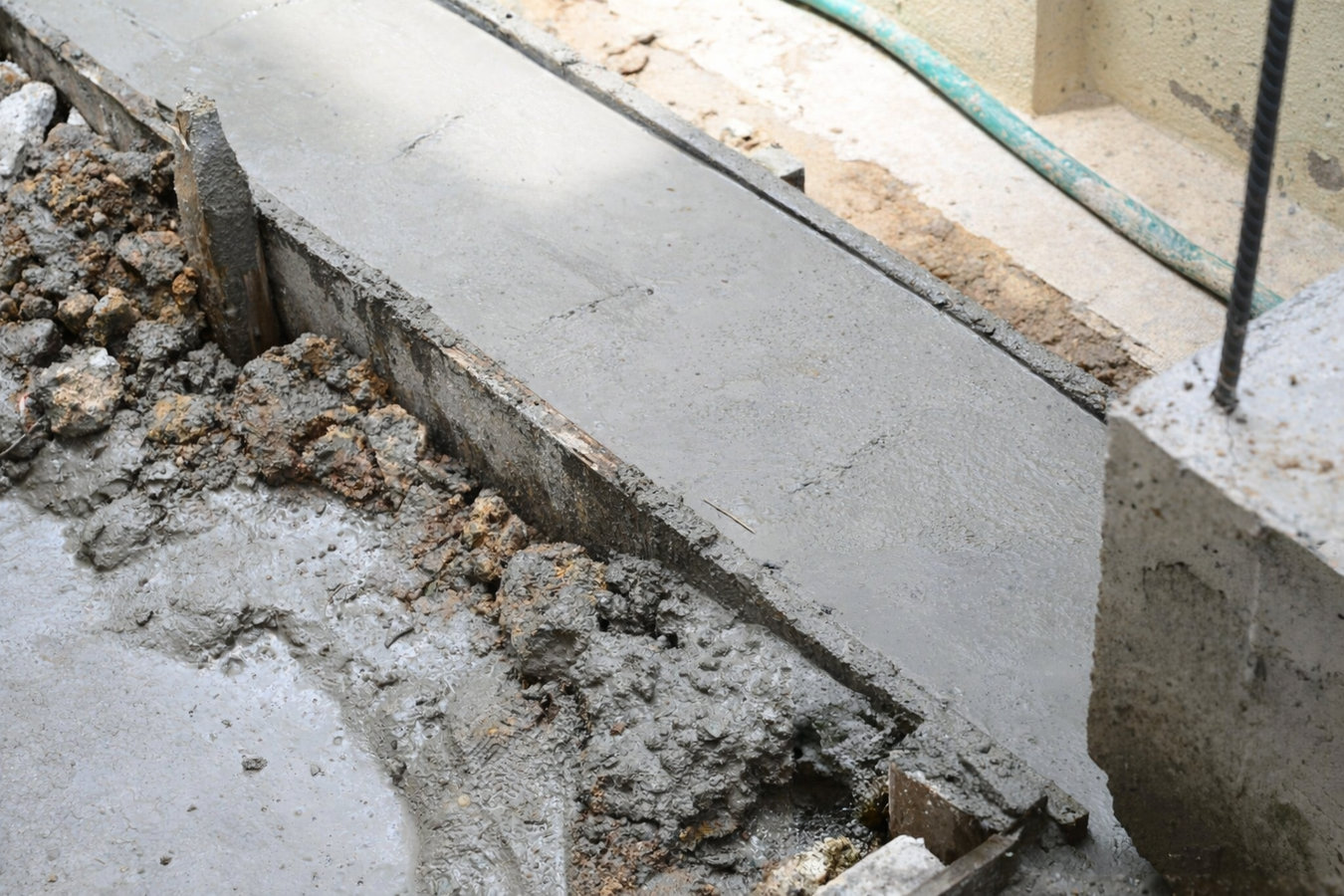
Sunken slabs and uneven foundations are common in Charlottesville's clay soil. We lift concrete back to level without tearing it out - and we fix the drainage issue that caused it to sink.
Foundation raising in Charlottesville lifts a sunken or uneven concrete slab back to its original level position by drilling small holes through the surface and pumping material underneath to fill the voids and push the concrete up - most residential jobs are completed in one day and the surface is ready for normal use within 24 hours.
This service is needed more often in Charlottesville than in many other areas because of the red clay soil that covers the Piedmont region. Clay absorbs moisture and swells, then dries out and shrinks - and that cycle repeats every year, gradually working the soil out from under concrete slabs and foundations. Homeowners who have dealt with this problem once often pair foundation raising with work like slab foundation building when a section of their property needs a more substantial solution.
The key is addressing what caused the slab to sink in the first place. Lifting a slab without fixing a drainage or grading problem is a temporary fix. A contractor who looks at the whole picture - the concrete and the conditions around it - gives you results that actually hold.
If interior doors that used to swing freely now drag on the floor or refuse to latch, that is often one of the first signs that your foundation has shifted. The same goes for windows that have become difficult to open or close. In Charlottesville's older homes, this symptom tends to appear or worsen in late spring after a wet winter - when the clay soil has gone through its biggest expansion-and-contraction cycle of the year.
Diagonal cracks running from the corners of door frames or windows toward the ceiling are a classic sign of foundation movement, not just normal settling. Horizontal cracks along a basement wall are even more serious. If you are seeing new cracks appear or existing ones grow wider after a particularly wet season, that pattern is worth having evaluated by a professional.
Walk slowly across your basement floor, garage floor, or ground-level rooms. If the floor feels like it tilts in one direction, or if an object rolls across it on its own, the slab beneath has likely dropped in one area. This is especially common in Charlottesville homes built on clay-heavy lots where drainage has never been properly managed.
If you regularly see standing water collecting against your home's foundation after a rainstorm, the soil underneath is being saturated repeatedly. Over time, that repeated wetting and drying of Charlottesville's clay soil will cause the ground to shift and the foundation above it to follow. This is one of the most preventable causes of foundation sinking - and one of the most commonly overlooked.
We offer both mudjacking and polyurethane foam injection, and we choose the method based on the size of the job, the type of slab, and the conditions underneath. Mudjacking pumps a mixture of soil, cement, and water under the slab to fill voids and lift it back into position - it is proven, cost-effective, and well-suited to larger slab areas. Foam injection uses an expanding polymer that hardens quickly, leaves smaller holes, and weighs far less than the slurry used in mudjacking, which matters on soil that is already under stress. We pair both methods with an honest assessment of the drainage and grading issues that caused the sinking - because lifting without fixing the root cause is not a lasting solution.
We work on garage floors, basement slabs, front stoops, porch slabs, driveway sections, and interior floors that have dropped out of level. For properties where the underlying structural situation is more involved, we also handle concrete cutting when sections need to be removed before any lifting work can begin - and we coordinate that sequencing so you are not managing two separate contractors.
For homeowners who need a cost-effective lift on larger slab areas like driveways, garage floors, and basement sections.
For jobs where fast curing, minimal holes, and lighter weight material are priorities - including interior slabs and stoops.
For garage slabs that have settled in one corner or along an edge, creating a slope that affects how the space functions.
For front or rear stoops that have pulled away from the house or tilted toward the foundation after years of clay soil movement.
For homeowners converting or finishing a basement where an uneven floor needs to be corrected before work can continue.
For properties where the root cause of sinking - standing water, poor grading, or a failed downspout - needs to be identified and addressed.
Charlottesville sits in the Virginia Piedmont, where red clay soil is the norm rather than the exception. Unlike sandy or loamy soils that drain quickly, clay holds water - it swells when saturated and contracts when it dries. Charlottesville averages around 45 inches of rain per year, with a wet season that peaks in late winter and spring. That means the clay under most homes here goes through a significant expansion-and-contraction cycle every year, and over time that cycle pulls the ground away from the concrete above it. Much of the city's residential housing was built between the 1940s and 1980s, when compaction standards were less rigorous and drainage systems were designed for a different era. Homeowners in neighborhoods like Belmont and Fry's Spring frequently encounter foundation movement that their newer-construction counterparts in other markets never see. The National Weather Service data on precipitation patterns in Central Virginia confirms the sustained moisture load this region experiences annually.
Sloped lots compound the problem. Many homes in Charlottesville - particularly those west of downtown toward the Blue Ridge foothills - sit on terrain where water runoff naturally concentrates near the foundation rather than draining away from it. We serve homeowners across the area, including those in Waynesboro and Staunton, where similar clay soil conditions create the same patterns of foundation movement. Understanding how the local terrain and soil interact with a specific property is what separates a good outcome from a temporary fix.
When you reach out, we will ask a few basic questions about what you are seeing, where it is happening, and how long it has been going on. We aim to respond within one business day. You do not need to know the cause - just describe what you have noticed.
A contractor will walk your property, look at the affected areas, check drainage patterns and soil conditions, and explain what they find in plain terms. This visit is typically free and takes 30 to 60 minutes. You will receive a written quote before any work is scheduled.
If a permit is required - which it often is for structural foundation work in Charlottesville and Albemarle County - we handle pulling it before any drilling begins. Most jobs can be scheduled within one to three weeks once the permit is in hand.
The crew drills small holes through the slab, pumps material underneath to fill voids and lift the concrete, then patches the holes neatly. Most residential jobs finish in a single day. You can typically walk on the surface within a few hours and return to normal use within 24 hours.
Free written estimate. We respond within one business day. No obligation to proceed.
(434) 235-6128The Piedmont clay that runs under most of Charlottesville behaves differently from the soil in other parts of Virginia - it moves more, holds more water, and puts different stresses on concrete. We know how local soil conditions affect what method to use and how deep to assess. That site-specific knowledge comes from working in this area consistently, not from applying a standard approach regardless of conditions.
Lifting a slab without identifying and correcting the drainage or grading issue that caused it to sink is a short-term fix. Before we quote any job, we walk the property and look for the source of the problem - whether that is a downspout aimed at the foundation, poor grading, or eroded soil underneath. That assessment is part of every estimate, not an add-on.
Structural foundation work in Charlottesville and Albemarle County typically requires a permit. We pull that permit before any work begins, coordinate the inspection, and make sure your project record is clean. A contractor who suggests skipping the permit process is not protecting your interests - they are protecting their schedule.
We can provide references from foundation raising jobs completed in the Charlottesville area - specifically on older homes similar in construction and age to yours. Ask us for jobs done at least two years ago so you can assess how the work has held up over time. That is the only way to really evaluate whether a contractor's work lasts. The{' '} American Concrete Institute at{' '} concrete.org sets the professional standards we follow on every project.
Foundation raising in Charlottesville requires a contractor who understands the local soil, knows the permit process, and is honest about when lifting is the right answer versus when replacement makes more sense. We will tell you which situation you are in before any work begins.
When damaged or misaligned sections need to be removed before any lifting or repair work can begin.
Learn MoreFor properties where the existing slab is beyond raising and a full new concrete foundation is the right answer.
Learn MoreCharlottesville's spring rains put real pressure on clay-heavy soil - calling now means your home is protected before conditions get worse.